
Blog
 Categories
 - Blue Sapphire (Neelam)
- Yellow Sapphire (Pukhraj)
- Emerald (Panna)
- Ruby (Manik)
- Diamond (Heera)
- Pearl (Moti)
- Cat's Eye (Lehsunia)
- Hessonite (Gomed)
- Coral (Moonga)
- Amethyst
- Opal
- Alexandrite
- festive
- Sapphires
- Ammolite
- Larimar Stone
- Turquoise Stone (Firoza)
- Tourmalines
- Moonstones
- Lapis Lazuli
- Zodiac Birthstone
- Citrine
- Tanzanite
- Gemstone
- Trending
- Color Gemstone
Ruby Gemstone: How Color, Clarity, Cut and Carat Affect Its Value
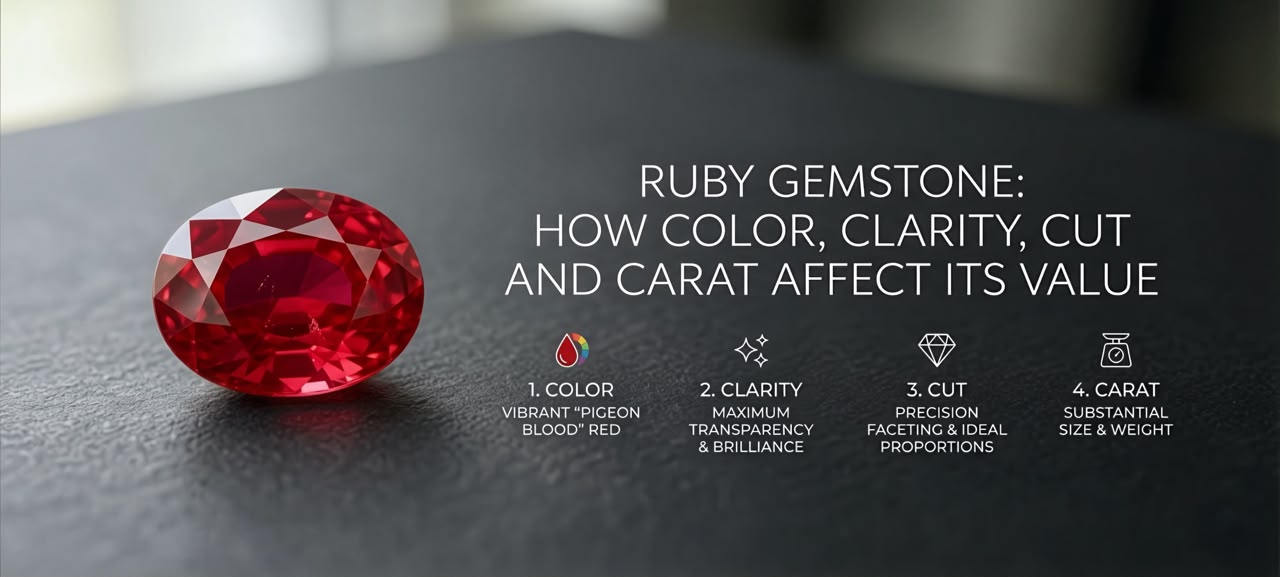
Buying a ruby stone is trickier compared to a diamond. While diamonds follow a standard grading system, ruby value is most importantly determined by its color. There is a strong misconception that rubies occur in only one shade. This makes buyers think that the ruby price is the same for all. Pigeon blood red rubies are most sought after and command high prices, while overly dark ones carry significantly lower market value.
To make a confident purchase, you need to look beyond the surface color and understand how the combined forces of Color,
Clarity, Cut, and Carat Weight determine a ruby’s true price tag. This blog covers all these necessary aspects that impact
the ruby value.
Factors Affecting Ruby Value
As a colored stone, 50% of the
Manik stone
value is determined by its color. The remaining 50% of the value is determined by other factors such as clarity, cut, carat
weight, origin, and treatment. Let's explore them:
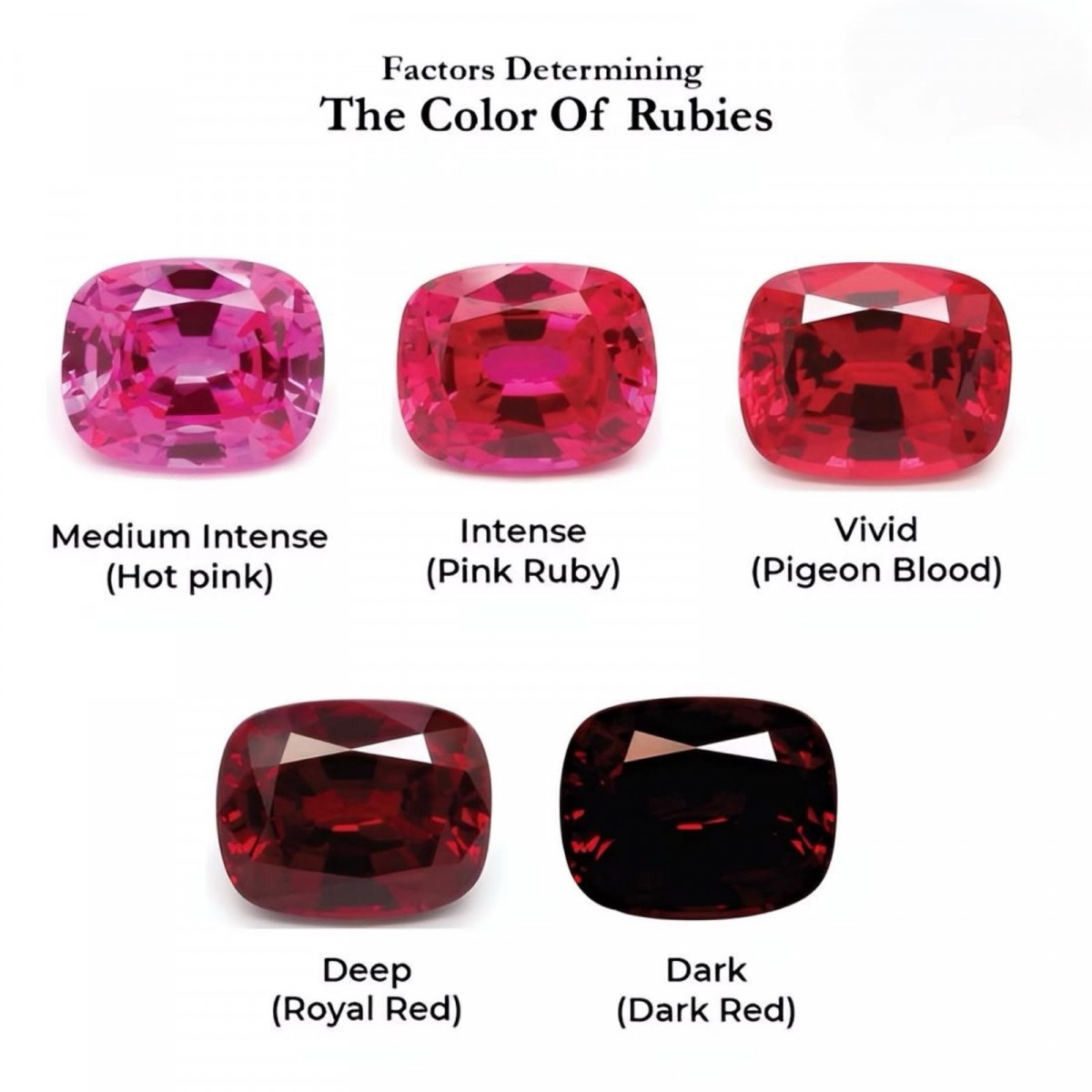
Color: Most Attractive and Valuable
It is the most important factor when assessing the cost of ruby. Gemologists evaluate ruby color
using three distinct components: Hue, Tone, and Saturation.
Hue (The Primary Color)
It refers to the exact color of the stone. Red is the primary color of ruby gemstone. Purple, orange, and pink are the secondary
colors. To qualify as a quality ruby, the primary color should be high in amount compared to the secondary color. The most
common shades of ruby are:
- Pure Red: The most desirable hue with little or no secondary tint. Best for astrological purposes.
- Purplish red: Highly accepted color for fine jewelry.
- Orange and Pinkish red: Generally decreases the gem's market value. If a stone is too pink, it is classified as pink sapphire and not ruby.
Tone (The Lightness or Darkness)
It refers to the intensity of the color: light or dark.
- Ideal Tone: Medium tone is the ideal color tone for Manik stone. It reflects maximum color and brilliance.
- Too Dark: Looks opaque, dull, and blackish. Light is not reflected well, making the stone lose its brilliance.
- Too Light: The primary color is too light, making the stone look dull.
Saturation (Color Intensity)
The purity of the color is judged by its saturation.
- High Saturation: Pure, intense red color with no black or brown undertones. The most desirable saturation type that makes the ruby reflect its pure color. Ideal for jewelry and astrology purposes.
- Moderate Saturation: A rich red color with black, gray, and brown undertones can be seen.
- Low Saturation: The stone lacks depth, and brown undertones are clearly seen. This makes the stone lose its beauty and sparkle. The ruby stone price decreases with poor saturation.
What is "Pigeon’s Blood" Red Ruby?
Pigeon blood ruby
is among the most valuable rubies in the world. These stones feature an exceptional pigeon blood red hue, which is rare
to find. Only 1% of all rubies qualify for the pigeon blood color grade. Burma holds the tag of a prestigious source
from which pigeon blood red rubies come. Recent discoveries such as Madagascar and Mozambique mines also produce these
rubies. To qualify for the most sought-after pigeon blood red color grade, the rubies should have:
- “Pigeon blood” refers to the exceptional color grade of ruby gemstone.
- It should feature an intense, fiery red color with a purplish tint. The stone must feature 50% of the primary color, which is red.
- The presence of a slight purple undertone gives a rich look.
- Strong fluorescence is the key speciality of these rubies. Since they contain high amounts of chromium, they fluoresce under UV light. This makes the stone get a fiery glow, a characteristic feature of this stone.
Ruby Color Grading & Price Impact Matrix
|
Color Grade |
Visual Characteristics |
Secondary Undertones |
Price & Value Impact |
Buyer Recommendation |
|
Pigeon’s Blood Red |
Vivid, intensely saturated red with strong red fluorescence under UV light |
Very light purplish tint |
Commands the highest market price per carat |
Best for high-end investment pieces and fine jewelry. |
|
Pure / Vivid Red |
Rich red, medium tone, high saturation |
Moderate purplish undertones |
Excellent value |
Astrological use and fine jewelry |
|
Purplish-Red |
Crimson red |
Moderate purplish undertones |
High to moderate price depending upon quality |
Great choice for daily rings and pendants |
|
Pinkish-Red |
Lighter red tone |
Pinkish undertone |
Too much pink hue classifies the stone as pink sapphire |
Budget-friendly option for buyers |
|
Brownish-Red |
Overly dark tone |
Brownish or blackish undertones |
Lowest Value |
Lack brilliance and true color of the stone |
Clarity: Rare and Exceptional
Rubies have natural inclusions, which also serve as their authentication proof.
Common ruby inclusions are:
- Rutile Needles: Tiny thread-like needles, often an indicator of real rubies.
- Fingerprints: Human finger-like impressions on the surface.
- Mineral Crystals: These crystals naturally occur during ruby gemstone formation. Like rutile needles, these are also used to identify whether the stone is real or not. These mineral crystals are apatite, zircon, spinel, or garnet.
- Color Zoning: The uneven distribution of color in ruby is termed as color zoning. Some regions may look darker while the others may appear lighter. Extreme color zoning decreases the value of the stone.
- Negative Crystals: Cavities, voids, or bubbles inside the stone. It is a natural growth in the stone and hence differentiates between natural and synthetic ruby stones.
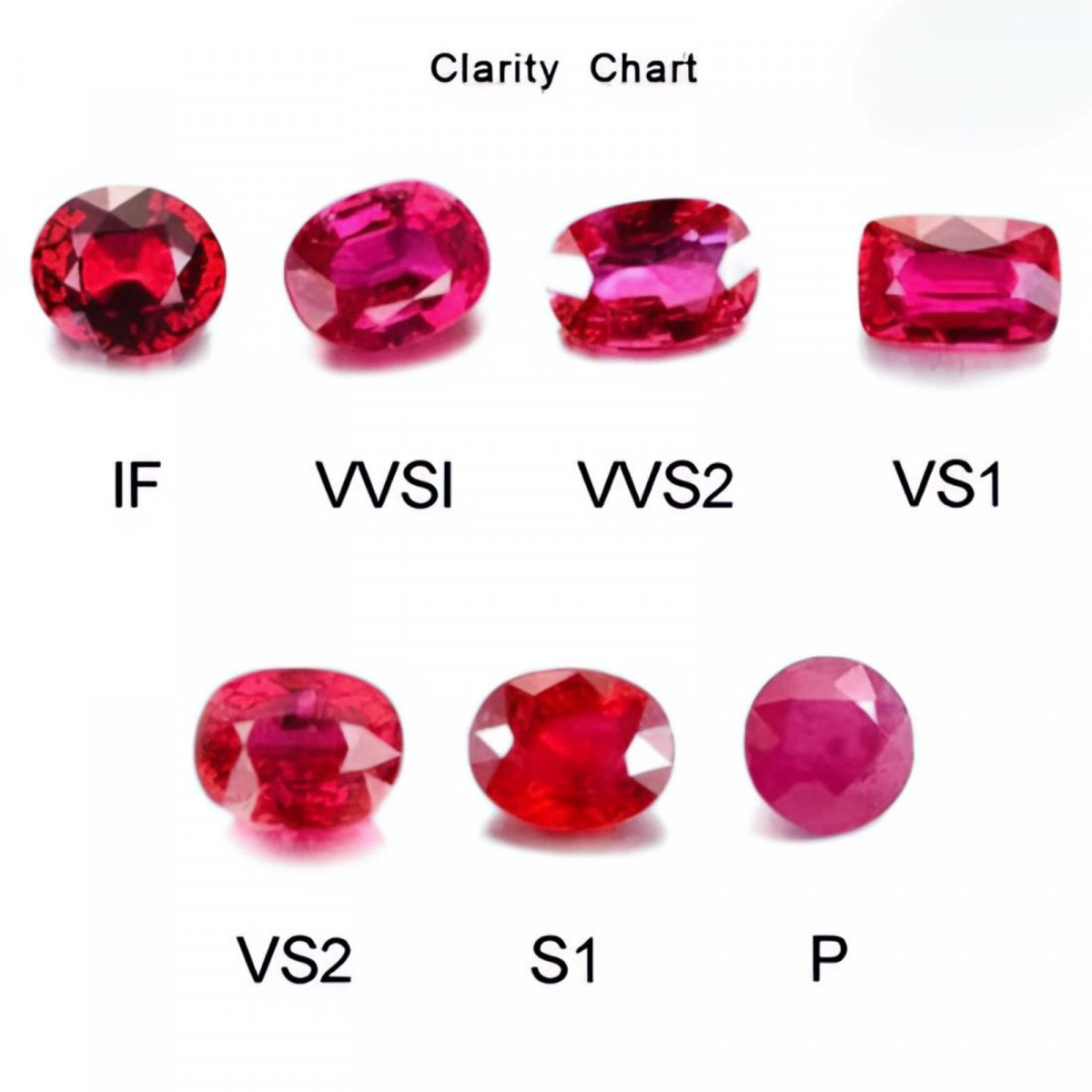
Eye-Clean Rubies
A ruby is said to be eye clean if it has no visible marks or inclusions when seen closely. Gemmologists use a microscopic
loupe to look for these inclusions. Ruby value based on clarity is as follows:
- High Value: Eye clean and flawless rubies are extremely rare. The cost of a ruby with no inclusions starts from INR 10,000 to INR 5 lakhs and more, depending on the quality.
- Moderate Value: Light inclusions visible under a microscope are also valuable and do not lower the price.
- Low Value: Heavy inclusions reduce brilliance and make the stone look dull. This lowers its value.
Cut: Precision Matters
A ruby cut is often overlooked, but it also impacts its value and overall look. Here is what one
should look for:
- The cut should be well proportioned to reflect brilliance and color.
- Rubies are rare, and it's important to maintain their weight along with the required light reflection.
- Skilled artisans ensure that these stones are cut perfectly, retaining their carat weight, color depth, and brilliance.
- The stone should not be cut too shallow, as the light passes straight through the stone without reflecting to your eye. This makes the stone look dull or pale.
- If the stone is cut too steeply, the light enters the gem but bounces back to your eye. This creates blackout zones, which reduce the ruby's brilliance.
Popular Ruby Cuts
While you check for the above factors before buying a ruby, you should also know which cut suits you the best.
- Oval and Cushion cuts: Best ruby cuts as they retain carat weight and color depth—popular choice for jewelry and astrological purposes.
- Round Cuts: Timeless cut for ruby as it maximises color brilliance. Also hides internal flaws and inclusions. Best choice for solitaire engagement rings.
- Emerald and Pear Cuts: These cuts give a distinguished look to the stone.
Carat Weight: Rare and Remarkable
Carat weight of a ruby is the actual weight of the stone measured in a specific unit of mass. It
is called ratti in Hindi. Rubies differ in size; they can be as small as 0.01 carats or bigger than 50 carats. How carat
weight affects ruby value:
- Rubies above 2 carats are considered rare. The price increases as the size of the gemstone increases.
- Smaller rubies less than 2 carats can command a high price if they feature vivid red color and high clarity.
- Carat weight and visual size are different. Two rubies may have identical carat weight, but the visual size may differ depending upon the cut, shape, and depth measurements.
- Rubies are denser than diamonds; thus, they visually look smaller. A 1-carat ruby and a 1-carat diamond may have the same weight, but the ruby looks smaller visually.
Treatment: Color and Clarity Enhancement
Over 95% of rubies are heat-treated, and this practice is highly accepted in the gemstone industry.
Heat treatment is done to enhance the color and clarity of the stone.
- Heated Rubies: Though both heated and unheated rubies are natural, there is a difference in their price. This cost difference varies with the amount of treatment given to the stone.
- Unheated Rubies: Compared to heated rubies, unheated rubies are much more expensive and rare. The price of unheated ruby increases with color, clarity, cut, carat weight, and origin.
Origin: Where It Comes From
Ruby value increases with the origin it comes from.
Myanmar (Burma): Historically famous for producing the world's most expensive rubies-pigeon blood red rubies.
Mozambique: Leading producer of rubies. Mozambique rubies feature rich red color and high clarity.
Madagascar: Rubies from this origin are known to feature a vivid red hue with a pinkish or purplish tone.
Sri Lanka: Rubies from Sri Lankan origin feature a vivid to pale red hue with a pinkish undertone.
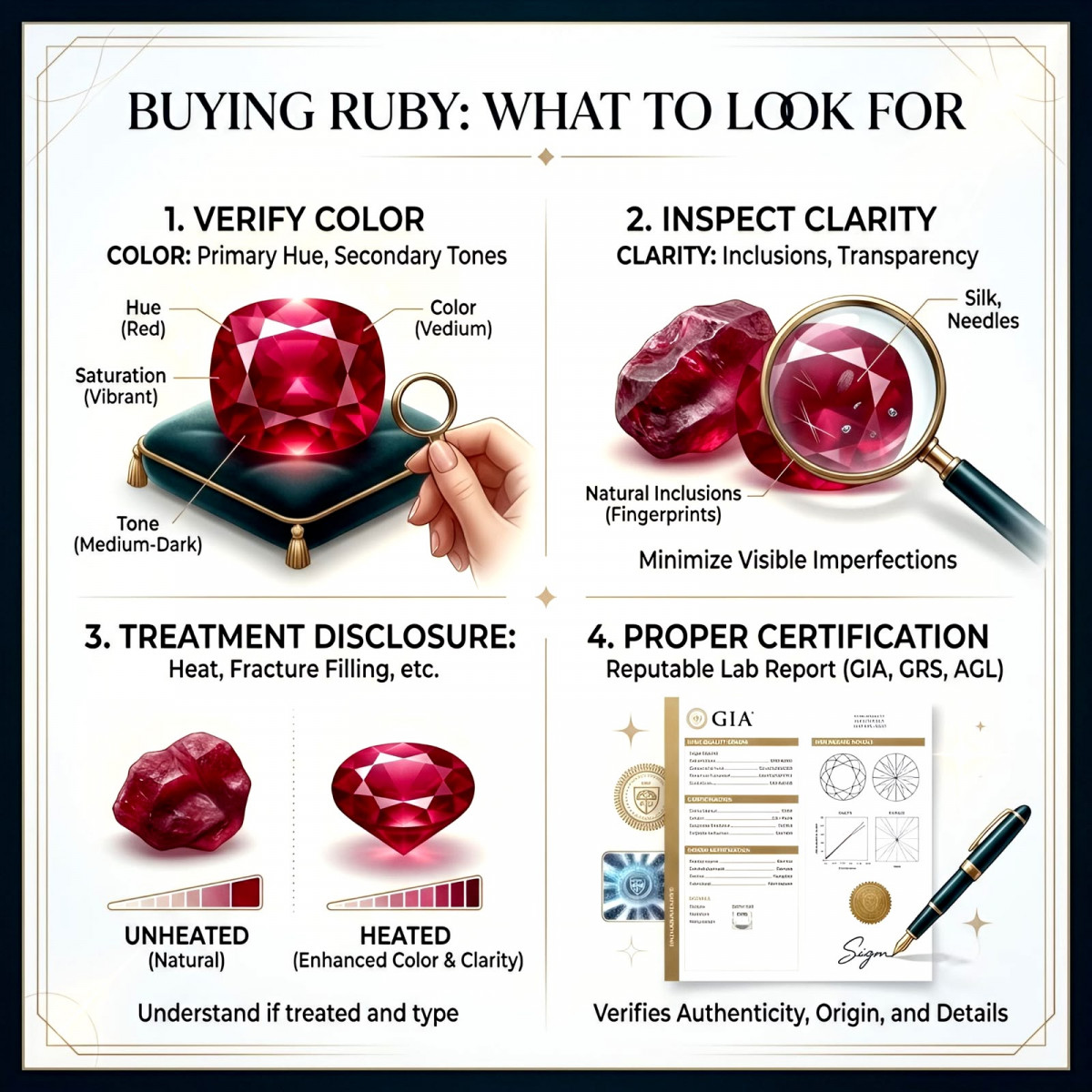
Final Checklist: How to Buy the Perfect Ruby
Before you purchase a ruby, consider these:
- Verify Color First: Does your ruby look pale or overly dark? Choose a vivid red colored, medium-tone, highly saturated ruby stone.
- Check for Transparency: Have a close look at the inclusions. Avoid highly included rubies.
- Inspect the Cut: Choose only highly symmetrical rubies with clean edges. Avoid the ones with extinction and windowing.
- Insist on Lab Certification: Always ask for a certified ruby from recognised laboratories like GIA, GRS, Gubelin, and AGL.
To conclude, buying a ruby is not just about its color; other factors also contribute to its price.
If you are not sure how to assess these factors, then Navratan is here to help you. You will get a certified ruby gemstone
plus expert gemological advice to help you find the perfect stone for your budget. Explore Natural Ruby Gemstones at Navratan.
FAQ
Q1: Are inclusions normal in a natural manik stone?
Ans: Yes, inclusions are normal in a natural ruby stone . These are generally trapped minerals inside the stone during its formation.
Q2: How can I say my ruby is genuine?
Ans: Only certification from authentic laboratories like GIA, GRS, and Gublein can verify that your ruby is natural and genuine.
Q3: What is the most important factor, cut or clarity, while assessing ruby value?
Ans: Cut is more important when compared to clarity because a precise cut can hide the internal flaws or inclusions,
giving the ruby a good overall look.


- Blue Sapphire (Neelam)
- Yellow Sapphire (Pukhraj)
- Emerald (Panna)
- Ruby (Manik)
- Diamond (Heera)
- Pearl (Moti)
- Cat's Eye (Lehsunia)
- Hessonite (Gomed)
- Coral (Moonga)
- Amethyst
- Opal
- Alexandrite
- festive
- Sapphires
- Ammolite
- Larimar Stone
- Turquoise Stone (Firoza)
- Tourmalines
- Moonstones
- Lapis Lazuli
- Zodiac Birthstone
- Citrine
- Tanzanite
- Gemstone
- Trending
- Color Gemstone


-
Ruby Gemstone: How Color, Clarity, Cut and Carat Affect Its Value
September 22nd, 2026 -

What Makes Blue Sapphire One of the Most Valuable Gemstones?
September 17th, 2026 -
 August 7th, 2026
 -
 July 30th, 2026
 -
 July 22nd, 2026