
Blog
 Categories
 - Blue Sapphire (Neelam)
- Yellow Sapphire (Pukhraj)
- Emerald (Panna)
- Ruby (Manik)
- Diamond (Heera)
- Pearl (Moti)
- Cat's Eye (Lehsunia)
- Hessonite (Gomed)
- Coral (Moonga)
- Amethyst
- Opal
- Alexandrite
- festive
- Sapphires
- Ammolite
- Larimar Stone
- Turquoise Stone (Firoza)
- Tourmalines
- Moonstones
- Lapis Lazuli
- Zodiac Birthstone
- Citrine
- Tanzanite
- Gemstone
- Trending
- Color Gemstone
Blue Topaz Stone: Meaning, Benefits, Price & How to Spot a Real One
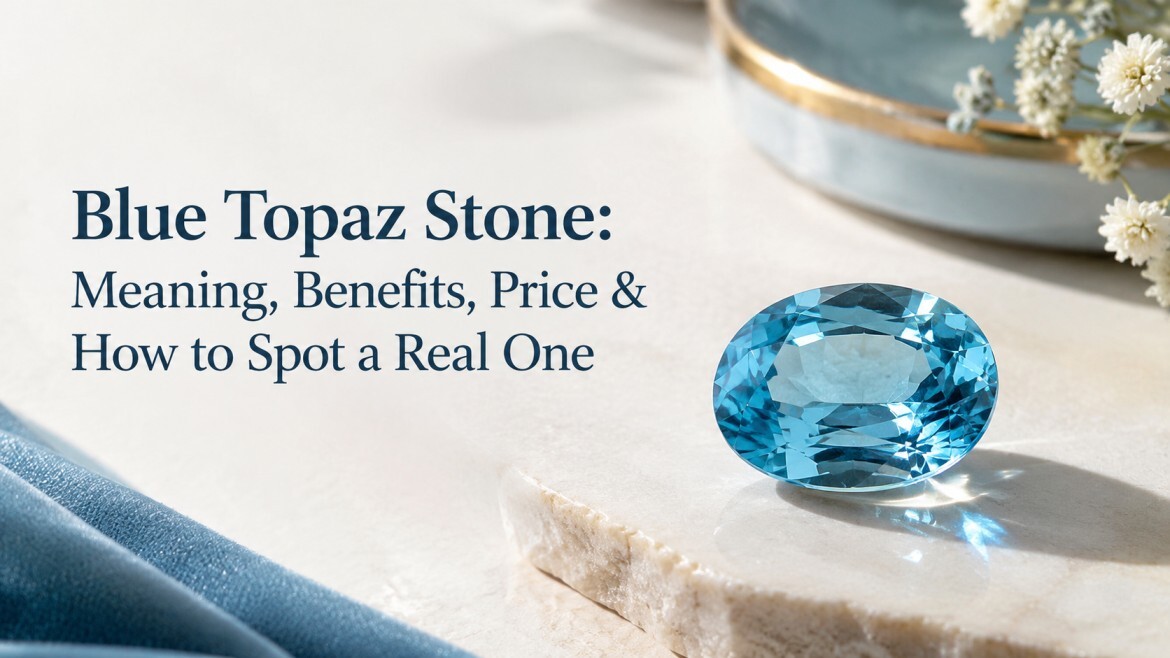
When the color speaks serenity, and ancient folklore has much to tell, the stone is none other than blue topaz . In Vedic astrology, this stone is believed to be a powerful upratna for the blue sapphire stone. This stone is celebrated as the gemstone of communication, confidence and emotional clarity in many cultures. Besides its traditionally believed astrological, spiritual and healing benefits, blue topaz is the most sought-after stone amongst jewelry lovers seeking something classy and soothing.
The blue topaz stone price starts from an affordable range and can go upto to record-breaking figures depending on the quality.
One stone has many benefits, but buyers often get confused with its authenticity because the market is flooded with synthetic
glass, dyed quartz, and cheap plastic imitations.
What is Blue Topaz?
Blue topaz is a real silicate mineral formed in the Earth's crust under high temperature and pressure. According to GIA, almost all blue topaz stones are formed by exposing white topaz to irradiation and heat treatment. Thus, finding these stones in their natural form is next to impossible. The most common blue topaz varieties are Sky Blue, Swiss Blue and London Blue.
While natural blue topaz showcases a pale blue color, its durability makes it a desirable gemstone for long-lasting jewelry.
This stone is a perfect choice for engagement rings.
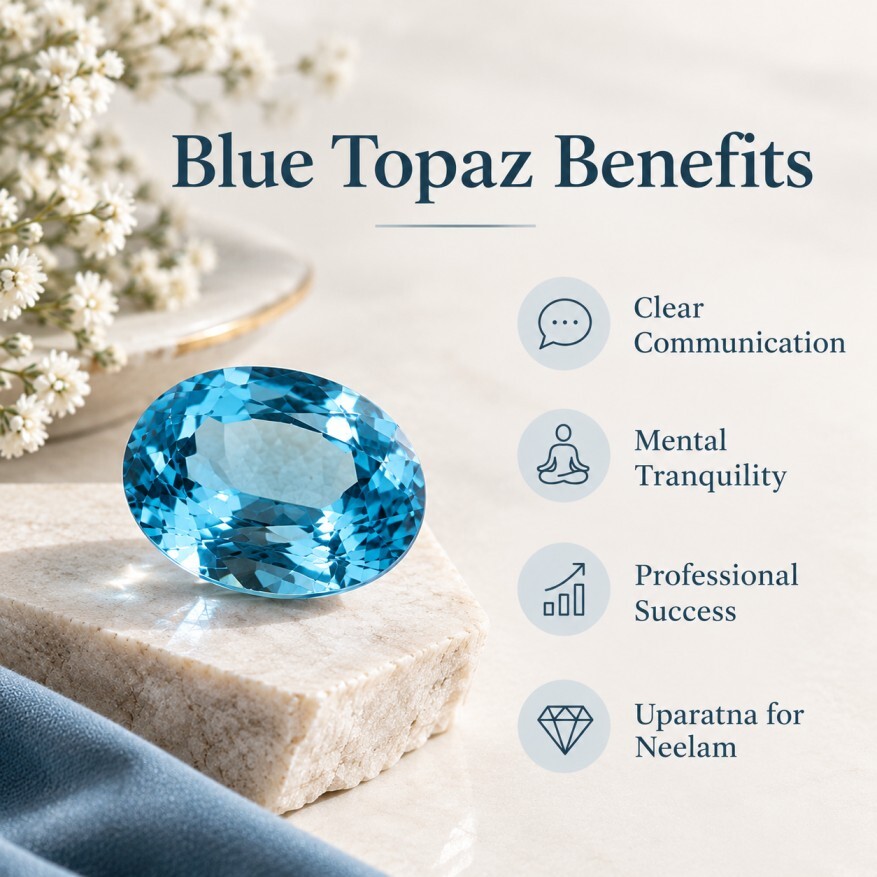
Key Benefits of Wearing Blue Topaz:
- The Ideal Uparatna for Blue Sapphire: As per traditional Jyotish beliefs, blue topaz is an ideal upratna or substitute for the Neelam stone. This stone is believed to mitigate the stress and delays associated with a challenging Saturn placement or Shani Sade Sati .
- Unlocking the Throat Chakra: Spiritual practitioners believe that blue gemstones like blue sapphire and blue topaz are linked to the throat chakra. An unblocked throat chakra reduces self-expression issues, misunderstandings and the stress of being unheard. Meditating with this blue gemstone is believed to activate this throat chakra. When you experience self-expression, creativity and emotional balance, then blue topaz is working on you.
- Mental Peace & Emotional Healing: As per color psychology, blue is a cool color. Wearing blue topaz jewelry reduces insomnia, mitigates overthinking and instils calmness.
- Career Stability & Financial Wisdom: In Vedic astrology, blue topaz, also called
Neela Pukhraj
in Hindi, is associated with Saturn (Shani). Astrologically, Saturn is linked to long-term wealth; thus, wearing this
stone is believed to bring money.
Rules for Wearing Blue Topaz
To maximize its spiritual and astrological benefits, follow these traditional guidelines:
Metal Choice: For astrological benefits: Panchdhatu
For fashion and jewelry: Any metal that enhances the color of the stone
Finger Placement: For astrological purposes: Middle finger of the right hand
Auspicious Day & Time: Saturday morning
Purification Ritual: Purify the stone by dipping it in a bowl containing raw milk, Ganga Jal , tulsi leaves and honey. Chant the Saturn Mantra ( Om Sham Shanicharaya Namah )
Blue Topaz Price per Carat: What Determines its Value?
Natural blue topaz stone price ranges from affordable to expensive pieces. The following factors influence the gemstone's
price.
Factors Influencing Price
Color: The key driver of blue topaz price is its color. Natural blue topaz is a genuine stone that features a faint blue
color. The vivid color of this stone comes from treatment. Three main types of blue topaz gemstones are:
- Sky Blue Topaz: Soft, light shade like the clear blue sky
- Swiss Blue Topaz: Represents a neon blue color, just like the Caribbean Sea.
- London Blue Topaz: Darkest, mostly saturated hue of blue topaz like the deep blue ocean
All these topaz varieties are generally treated to enhance color. Thus, one should always look for certified blue topaz before investing.
Clarity: GIA classifies topaz as a type 1 gemstone, which means it has few inclusions. Blue topaz stone generally undergoes treatment to enhance clarity.
Cut: All cuts look good on topaz stone. Deep step cuts retain the color while brilliant cuts enhance intense brightness.
Carat Weight: Higher carat weight commands higher value. Treated blue topaz with high carat weights is readily available.
How to Spot a Real Blue Topaz (Authenticity Guide)
Gemologists believe that natural blue topaz has inclusions. This may help in differentiating natural topaz with fake topaz
stones. Here are some of the at-home authenticity tests that may help you spot a real blue topaz.
- Hold the stone near your mouth and breathe directly onto it. If the fog clears instantly, the stone is considered real.
- Examine air bubbles inside the stone with the help of a 10X jeweler’s loupe. Some gem experts believe that natural blue topaz doesn't have air bubbles.
- Real Blue Topaz feels noticeably cold to the touch at room temperature. In contrast, synthetic resin or plastic imitations warm up almost immediately.
Red Flags When Buying:
- Almost all blue topaz varieties are treated, so before buying, make sure you check treatments and have price clarity.
- Look out for Windowing (uneven color patches) and extinction (dark patches that block light from reflecting)
- Watch out for symmetrical cuts, as poor cuts can ruin the entire look.
- Too much shine may hint at a glass imitation.
If you are someone looking for a
certified blue topaz stone, explore our collection.


- Blue Sapphire (Neelam)
- Yellow Sapphire (Pukhraj)
- Emerald (Panna)
- Ruby (Manik)
- Diamond (Heera)
- Pearl (Moti)
- Cat's Eye (Lehsunia)
- Hessonite (Gomed)
- Coral (Moonga)
- Amethyst
- Opal
- Alexandrite
- festive
- Sapphires
- Ammolite
- Larimar Stone
- Turquoise Stone (Firoza)
- Tourmalines
- Moonstones
- Lapis Lazuli
- Zodiac Birthstone
- Citrine
- Tanzanite
- Gemstone
- Trending
- Color Gemstone


-
Blue Topaz Stone: Meaning, Benefits, Price & How to Spot a Real One
October 13th, 2026 -
Tanzanite Stone: Meaning, Benefits, Price & How to Spot a Real One
October 2nd, 2026 -
 September 30th, 2026
 -
How to Choose the Best Yellow Sapphire for Astrology and Jewelry
September 28th, 2026 -
Emerald Stone Price: What Determines the Value of a Natural Emerald?
September 25th, 2026