
Blog
 Categories
 - Blue Sapphire (Neelam)
- Yellow Sapphire (Pukhraj)
- Emerald (Panna)
- Ruby (Manik)
- Diamond (Heera)
- Pearl (Moti)
- Cat's Eye (Lehsunia)
- Hessonite (Gomed)
- Coral (Moonga)
- Amethyst
- Opal
- Alexandrite
- festive
- Sapphires
- Ammolite
- Larimar Stone
- Turquoise Stone (Firoza)
- Tourmalines
- Moonstones
- Lapis Lazuli
- Zodiac Birthstone
- Citrine
- Tanzanite
- Gemstone
- Trending
- Color Gemstone
How to Choose the Best Yellow Sapphire for Astrology and Jewelry
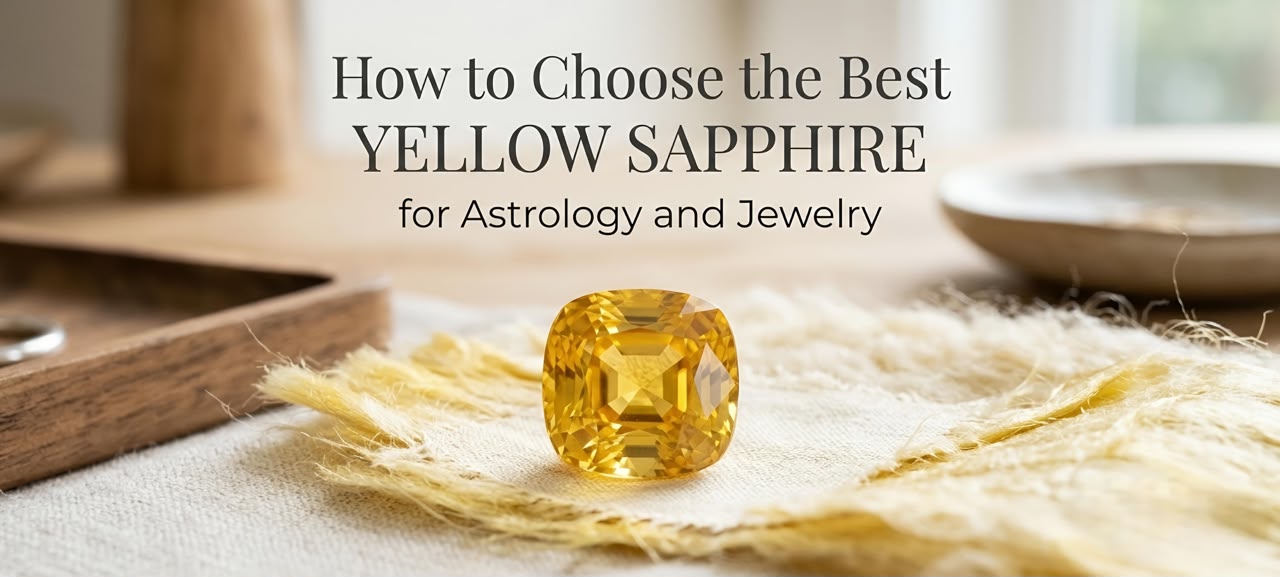
Yellow sapphire (Pukhraj) is a popular gemstone in jewelry and astrology. While it makes a beautiful center stone for everyday to high-end jewelry, it is considered a sacred gem in astrology. It is linked to the planet Jupiter and is said to bless the wearer with wealth, relationships, and professional success. However, purchasing a yellow sapphire needs to completely align with your end goal.
For jewelry purposes, vivid color, eye-clean clarity, and a precise cut are required. Vedic astrology, on the other hand, stresses a natural and untreated stone. Whether you are seeking this stone for everyday wear jewelry or astrological benefits, knowing the quality factors is essential. This yellow sapphire buying guide brings out the important differences between the two purposes so that you can find the right stone that serves your needs.
Evaluating Yellow Sapphire Quality: The 4Cs
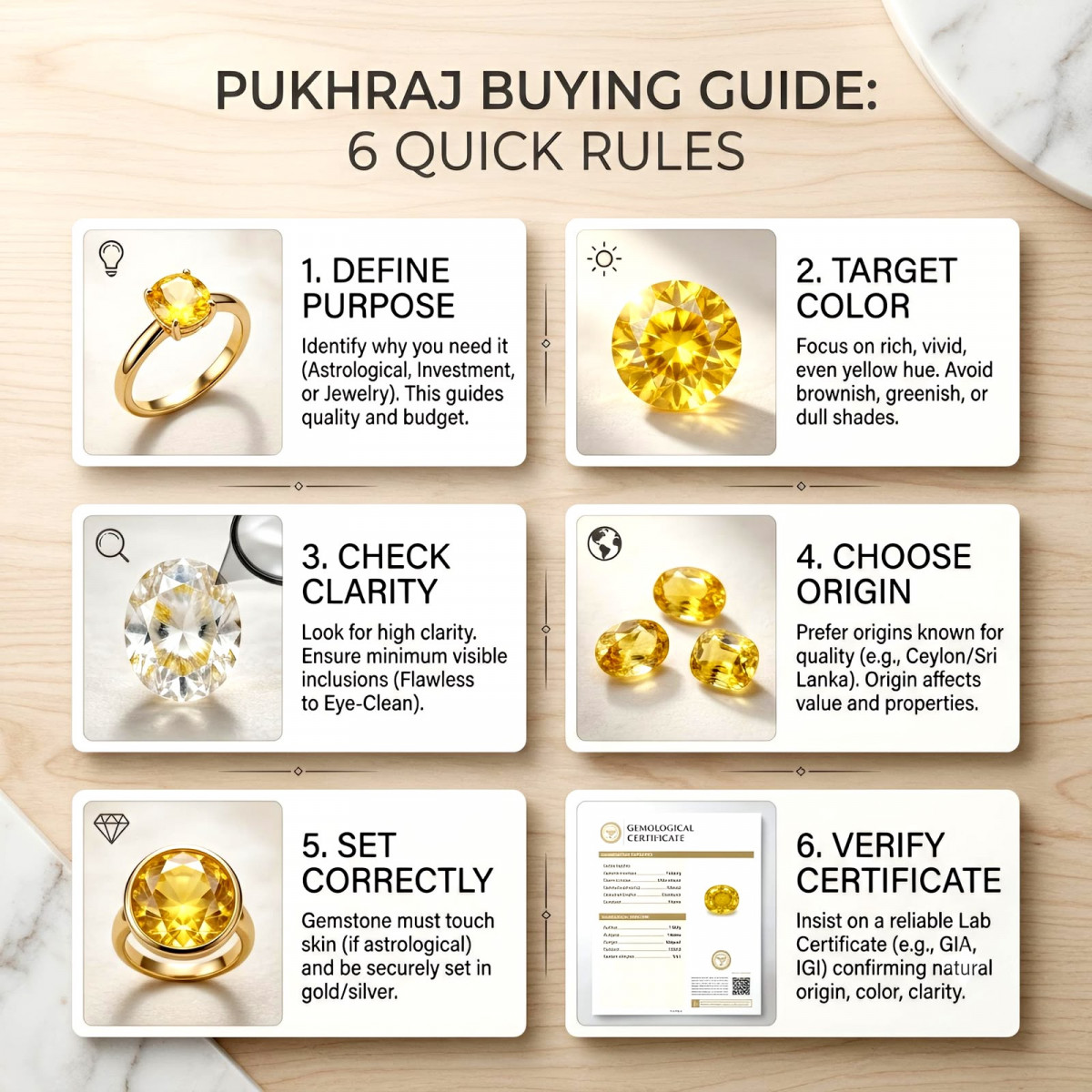
Assessing pukhraj quality is important for whatever reason you are looking for.
This is done by understanding the 4C’s.
Color (The Primary Factor)
Color is the most critical factor that determines the gemstone quality. It is evaluated on the basis of three determinants: Hue, Tone, and Saturation.
- Hue: The primary color for pukhraj stone is bright yellow. High-quality color can range from canary to deep yellow shades. Avoid gemstones with secondary undertones like greenish or brownish tints. Higher secondary overtones significantly lower both the beauty of the stone and its astrological efficiency.
- Tone: Avoid overly dark or pale shades. Aim for a medium to medium-light tone.
- Saturation: High saturation ensures a rich yellow color.
Also Read: What Determines the Value of a Yellow Sapphire?
Clarity (Internal Characteristics)
Yellow sapphires fall under type II gemstones, which means they carry minor inclusions.
- Natural Features: Common sapphire inclusions include soft rutile silk needles, tiny liquid-filled feather inclusions, or minute growth lines. These serve as an authentic indicator that the stone is natural and unheated.
- Eye-Clean Standard: Eye-clean yellow sapphires are a benchmark of higher quality. This means that the stones have no inclusions visible to the naked eye. Eye-clean or highly transparent sapphires reflect more light.
Cut & Transparency (Underestimated yet Important)
A precise cut displays high brilliance and color saturation.
- Brilliance & Light Reflection: A skilled lapidary cuts the stone with perfection. When the stone is cut, light enters the top and reflects off the internal surfaces and back out. This makes the stone reflect brilliance from all angles.
- Extinction: It refers to dark patches inside the faceted stone. If the cut is too steep, then the light gets absorbed heavily and doesn't reflect, making the stone look lifeless.
- Windowing: When the yellow sapphire is cut too flat, the light passes straight through an area of the stone without reflecting to your eye. This makes the stone look pale and uneven.
Geographic Origin
Different origins and gemstone characteristics help you decide which stone to choose.
Ceylon (Sri Lanka): Prized for their bright lemon-to-canary yellow hues, exceptional clarity, and high unheated availability. Ceylon yellow sapphires are best for astrology and jewelry.
Madagascar: Color ranges from vivid canary to deep yellow. High transparency makes these stones a valuable choice for jewelry, while their bright color best fits the strict requirements of Vedic astrology.
Thailand and Australia: These deposits frequently yield darker, golden-brownish or greenish-yellow sapphires. While they can be used in commercial jewelry, they are avoided for astrological purposes.
Choosing Yellow Sapphire for Astrology (Vedic Rules)
In Vedic astrology , pukhraj is linked to the planet Jupiter (Guru). This planet benefits the wearer with relationship success, job opportunities, and prosperity. It is also the best gemstone for marriage, especially for girls. When selected and worn correctly according to Jyotish rules, a natural yellow sapphire harnesses Jupiter's positive energy, including its spiritual and financial benefits. Minor treatments or small inclusions are acceptable when choosing this stone for jewelry purposes. In astrology, however, it must adhere to strict natural purity rules. Highly included, cracked, or enhanced sapphire can bring no benefits or negative results.
1. The Golden Rule: 100% Unheated and Untreated
For astrological use, sapphire should be 100% pure and free from any treatment.
- Why Heat Treatment Disables Energy: High-temperature heating alters the chemical structure of the stone and artificially enhances its color and clarity. In Vedic astrology, gemstones are believed to harness energy directly from their associated planet. Heat treatment makes changes in the gemstone's structure internally, weakening the natural flow of cosmic energy. Consequently, a heat-treated yellow sapphire becomes astrologically inert and ineffective for channeling Jupiter's blessings.
Read More Here: Heated vs Unheated Gemstones: The Truth Jewellers Don’t Want You to Know - Avoid Advanced Treatments: Beryllium treatment and glass filling are common sapphire treatments. In astrology, yellow sapphires given these treatments should be avoided, as they are of low quality and devoid of cosmic energy.
- Verification: Always look for certificates from trusted labs like GIA, IGI, and more. Make sure the certificate states “No indication of heating”.
Quick Comparison (Yellow Sapphire Astrology vs Jewelry)
Feature | For Vedic astrology | For Fine Jewelry & Design |
Primary Goal | Alignment of energy with Jupiter | Aesthetic beauty, brilliance, and durability |
Treatment Rule | 100% Unheated & Untreated | Heat-treated is acceptable |
Ideal Color | Bright canary/lemon yellow | Any shade (pastel, canary, golden) |
Clarity Requirement | Eye-clean, free from dark spots and cracks | Eye-clean preferred; minor inclusions acceptable |
Origin Preference | Ceylon (Sri Lanka) highly preferred | Ceylon, Madagascar, or Thailand based on budget |
Setting Style | Open-back setting in Gold (touches skin) | Prong, Bezel, or Halo settings in any metal |
Certification | Lab report confirming "Unheated/Natural" required | Lab report verifying gem authenticity recommended |
2. Clarity Standards & Astrological Flaws
While the inclusion of internal flaws is part of the identity of a natural yellow sapphire, it is important to know that, in astrology, these flaws disrupt the cosmic energy flow.
- Eye-Clean Requirement: The Pukhraj stone should be eye-clean to allow constant flow of Jupiter’s energy. This will help in enhanced benefits to the wearer.
- Flaws to Absolutely Avoid:
- Make sure the sapphire is free from internal cracks and fractures. In Vedic astrology, cracks are viewed as an energy imbalance. A smooth surface allows constant cosmic energy flow.
Read More in our blog: Is wearing a cracked gemstone right? - Ensure that your yellow sapphire for astrology is free from dark spots. These spots disrupt the energy flow, making the stone unfit for astrological use.
- Cloudiness blocks light transmission, making the gemstone astrologically inert.
3. Origin and Carat Weight
Ceylon (Sri Lanka): The best yellow sapphire for astrology comes from Ceylon (Sri Lanka). These gems are known to feature a vivid yellow hue and exceptional clarity. This helps cosmic rays reflect through the stone uninterrupted and bless the wearer with Jupiter's benefits.
Ideal Carat Weight: In Vedic astrology, the ideal carat weight for the pukhraj stone is 5.25 to 6.25 ratti. It is always best to consult a certified Vedic astrologer before purchasing to determine the exact weight required for your energy field.
4. Wearing Rituals & Activation ( Pooja Vidhi )
Before you wear a yellow sapphire stone, it is important to activate its inner energy so that it aligns with Jupiter's energy. Vedic rules that must be followed before you wear this stone are:
Metal: Yellow sapphire should always be worn in gold. It enhances the gemstone’s benefit.
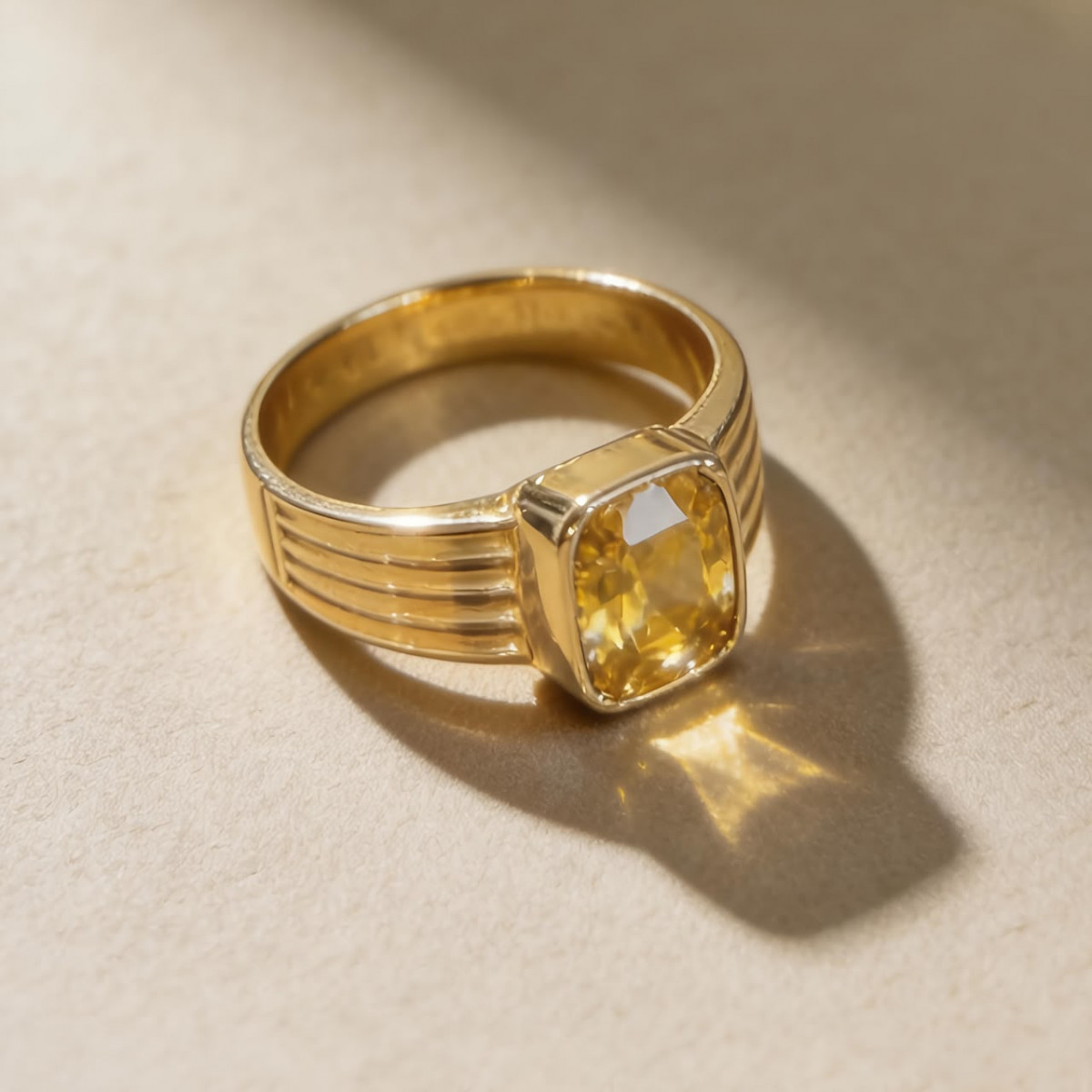
Setting Type: Must be crafted with an open-back setting so the bottom point of the sapphire touches the skin directly.
Read More: How Gemstones Should Touch the Skin
Finger: Yellow sapphire ring should be worn on the index finger of the right hand only.
Day & Time: Wear the ring on Thursday morning
Energization Ritual: Energize the pukhraj stone before you wear it. Performing this pooja vidhi activates the gemstone’s energy.
To learn more about the yellow sapphire wearing process, read our blog: How to Wear Yellow Sapphire (Pukhraj) Correctly: Finger, Day, Metal & Rules
Choosing Yellow Sapphire for Fine Jewelry
Yellow sapphire is a perfect choice for those seeking something different that fits in everyday and luxury jewelry designs. From warm color to excellent durability and deep significance, this stone is a classic option for an engagement ring, pendant, or cocktail ring.
- Durability for Everyday Wear: Sapphires rank 9 on the Mohs scale of hardness and are resistant to scratches, chipping, and daily wear and tear.
- Ideal for Engagement Rings: Because of its softer color, it is one of the most popular colored gemstone choices for bridal jewelry and everyday wear rings.
- Color Flexibility: Unlike Vedic astrology, in jewelry this stone does not require a specific color shade like vivid yellow. A small tint of a secondary hue brings uniqueness to the jewelry piece.
- Heat Treatment Acceptability: For jewelry purposes, you can choose heat-treated yellow sapphires; flawless and brighter hues are your priority.
- Metal Pairings: While gold supports the yellow shade of the stone, platinum and silver bring a striking contrast.
To conclude, yellow sapphire is the most valuable colored gemstone that is frequently counterfeited, artificially dyed, or heavily treated. Distinguishing them from genuine sapphires is difficult. A certificate ensures that the stone is natural and authentic, best for astrology and jewelry use. Explore & Shop Natural Yellow Sapphire
FAQ
Q1: Can I wear a heat-treated yellow sapphire for jewelry?
Ans: Yes, you can wear a heat-treated yellow sapphire if you are looking for affordable and daily-wear jewelry pieces. Other than this, if you are seeking high investment or astrological benefits, then purchasing an untreated yellow sapphire is a perfect choice.
Q2: How to know if yellow sapphire is real?
Ans: An authentic certificate is the only way to know if your yellow sapphire is real. It gives you information on whether the stone is natural or synthetic.
Q3: Which country is known to produce the best yellow sapphire stone?
Ans: Sri Lanka (Ceylon) is known to produce the best yellow sapphire stones. These gems feature a vivid yellow hue and high clarity.


- Blue Sapphire (Neelam)
- Yellow Sapphire (Pukhraj)
- Emerald (Panna)
- Ruby (Manik)
- Diamond (Heera)
- Pearl (Moti)
- Cat's Eye (Lehsunia)
- Hessonite (Gomed)
- Coral (Moonga)
- Amethyst
- Opal
- Alexandrite
- festive
- Sapphires
- Ammolite
- Larimar Stone
- Turquoise Stone (Firoza)
- Tourmalines
- Moonstones
- Lapis Lazuli
- Zodiac Birthstone
- Citrine
- Tanzanite
- Gemstone
- Trending
- Color Gemstone


-
How to Choose the Best Yellow Sapphire for Astrology and Jewelry
September 28th, 2026 -
Emerald Stone Price: What Determines the Value of a Natural Emerald?
September 25th, 2026 -
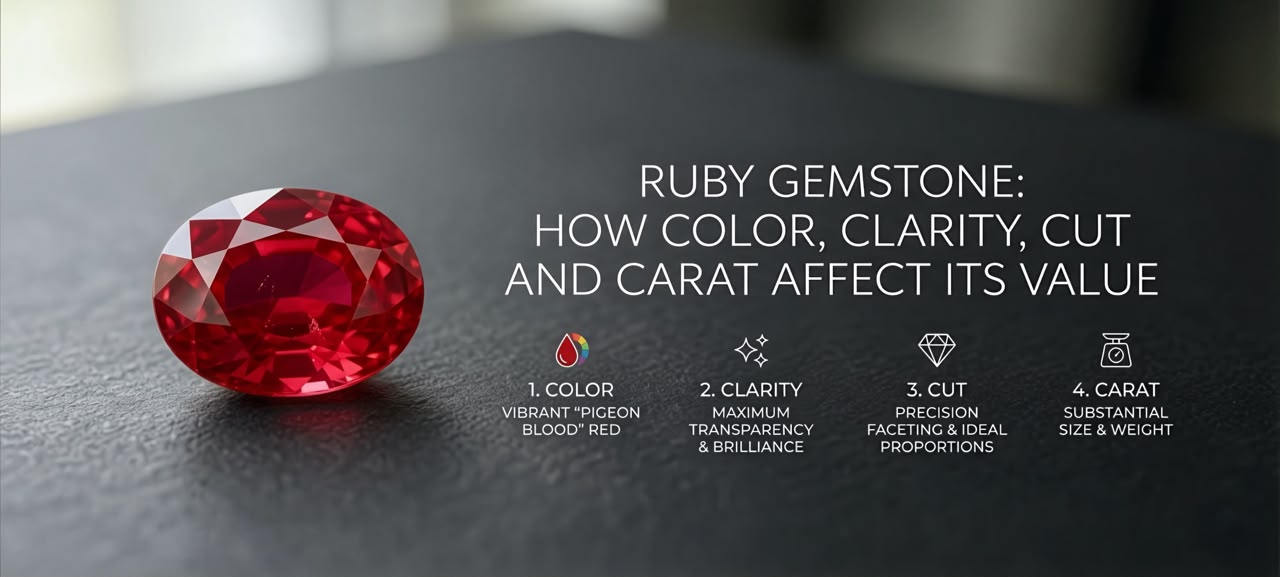
Ruby Gemstone: How Color, Clarity, Cut and Carat Affect Its Value
September 22nd, 2026 -

What Makes Blue Sapphire One of the Most Valuable Gemstones?
September 17th, 2026 -
 August 7th, 2026