Blog
 Categories
 - Blue Sapphire (Neelam)
- Yellow Sapphire (Pukhraj)
- Emerald (Panna)
- Ruby (Manik)
- Diamond (Heera)
- Pearl (Moti)
- Cat's Eye (Lehsunia)
- Hessonite (Gomed)
- Coral (Moonga)
- Amethyst
- Opal
- Alexandrite
- festive
- Sapphires
- Ammolite
- Larimar Stone
- Turquoise Stone (Firoza)
- Tourmalines
- Moonstones
- Lapis Lazuli
- Zodiac Birthstone
- Citrine
- Tanzanite
- Gemstone
- Trending
- Color Gemstone
Pearl Grading Factors and its Value
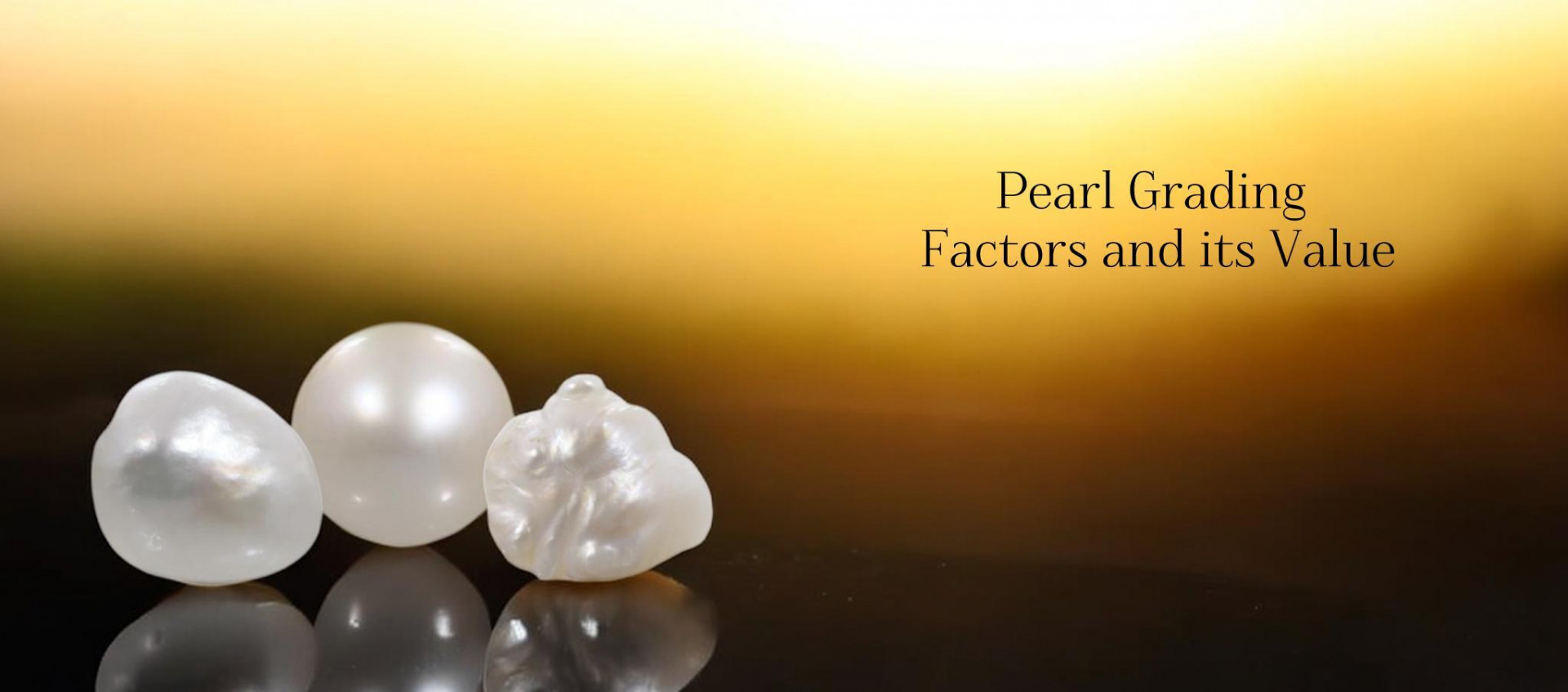
Like diamonds graded on the 4C’s, pearls are graded on the 5C’s. These grading factors are shape, size, color, luster, and surface quality. However, GIA has graded pearls on the 7 factors, nacre thickness and matching as other factors included in the
above. Understanding pearl grading factors helps you make informed decisions when buying pearls for jewelry or astrological benefits. Also referred to as Moti in Hindi, these gems are cherished for their calming energy, timeless elegance, and
connection to the Moon in Vedic astrology. Also Read: How Are Pearls Formed? The Birth of Moti Gems


How are Pearls Graded?
Grading of
gemstone
is done to assess their quality. When you
buy pearl gemstone
, make sure you consider these factors:
- Rarity: Less than 1% of natural pearl stone are rare. This is because it takes years and years for one pearl to form inside the living creature, an oyster of mollusks. This also tells you the reason why there is a price difference between natural and cultured pearls.
The price of natural or sucha moti ranges from INR 500 to INR 3,500 and beyond depending upon the carat weight. The rare
Basra pearl
are scarce because they are sourced from Pinctada radiata oysters, scarce species that have reduced in number. The price of Basra ka Moti can range from INR 50,000 and can go upto five lakhs. At Navratan , you can find these rare pearl gemstones of
different carats and sizes. Read Here: Basra Pearls: What Defines Them the Best?
- Luster: The pearl luster is graded from excellent to medium to poor. Lutser refers to refers to the shine and glow that appears on a pearl’s surface when light reflects off its layers. It indicates the quality of a Moti Ratna .
High-luster pearls have sharp, bright reflections, while low-luster ones appear dull. It greatly influences gemstone’s beauty, value, and overall appeal in jewelry. In Akoya pearl grading (type of pearl), luster is a key factor. It measures the sharpness
and brightness of reflections on its surface. Highly lustrous, these gems are more valuable and desirable.
Keshi pearl
are also graded on the basis of their luster. Read More here: What Are Keshi Pearls & Their Benefits?
- Shape: Round natural pearls are rare to find, hence increasing the price. Perfectly round gems are difficult to cultivate and are the most sought-after ones. Irregular-shaped Moti like Baroque pearls, though, give a fantastic look to your jewelry but are less priced compared to round counterparts.
- Size: As per the thumb rule, the higher the carat weight, the higher the price of a gemstone. However, other factors such as color, cut, and clarity also impact the value of the stone. In the case of pearl grading GIA, these are measured in mm (millimeters). Pearl size between 7-8 mm is considered the best for eye-catching jewelry.
- Nacre Quality : In Moti, nacre refers to the thickness of layers that ultimately lead to the formation of these gems. It determines the value of pearls. The thicker the nacre of a pearl, the higher its price. It also protects these gems from getting chipped and other damage. So if you think it's Ok to wear pearls every day, choose the ones with a thicker nacre. Read More here: Is it OK to Wear Pearls Every Day?
- Surface Quality: Besides a thicker nacre, the surface should be free from any blemishes.
- Color: Natural Moti comes in wide colors. Color is an essential consideration for the South Sea pearl grading factor. The brighter the golden color with the beautiful luster adds value to these pearls. White Moti with mirror-like finish are highly popular in Vedic astrology. They are believed to be associated with the calming characteristic of the Moon. Read Here: Which is the Best Pearl in astrology : Black, Golden or White

Pearl Grading Chart
|
Grade |
Surface |
Luster |
Shape |
Description |
|
AAAA |
Almost flawless, with barely any visible marks |
Very bright, mirror-like shine |
Perfectly round |
These are the best of the best. They look almost perfect to the eye and have a brilliant shine. Often used in high-end jewelry. AAAA pearls are rarer than AAA grade |
|
AAA |
Very clean, but may have a couple of small marks |
Bright shine with clear reflections |
Round to near-round |
Still excellent quality. They’re just a tiny step below AAAA, but they look beautiful and are great for fine jewelry. |
|
AA |
Has some visible blemishes or spots |
Soft to moderate shine |
Slightly Round |
A good option for those who want quality pearls without spending much. Still nice but not flawless. |
|
A |
Few surface flaws |
Low shine, dull appearance |
Irregular |
Prices are extremely low |

When you
buy Moti stone
, grading factors need to be considered. Navratan is the best place where you can purchase these gems with a certificate of authenticity. If you are someone looking for pearls as a timeless investment, this is the right place.


- Blue Sapphire (Neelam)
- Yellow Sapphire (Pukhraj)
- Emerald (Panna)
- Ruby (Manik)
- Diamond (Heera)
- Pearl (Moti)
- Cat's Eye (Lehsunia)
- Hessonite (Gomed)
- Coral (Moonga)
- Amethyst
- Opal
- Alexandrite
- festive
- Sapphires
- Ammolite
- Larimar Stone
- Turquoise Stone (Firoza)
- Tourmalines
- Moonstones
- Lapis Lazuli
- Zodiac Birthstone
- Citrine
- Tanzanite
- Gemstone
- Trending
- Color Gemstone


-
 May 7th, 2026
 -
 March 10th, 2026
 -
Timeless Jewelry Essentials: 5 Investment Pieces Everyone Needs
March 7th, 2026 -
 March 5th, 2026
 -