Blog
 Categories
 - Blue Sapphire (Neelam)
- Yellow Sapphire (Pukhraj)
- Emerald (Panna)
- Ruby (Manik)
- Diamond (Heera)
- Pearl (Moti)
- Cat's Eye (Lehsunia)
- Hessonite (Gomed)
- Coral (Moonga)
- Amethyst
- Opal
- Alexandrite
- festive
- Sapphires
- Ammolite
- Larimar Stone
- Turquoise Stone (Firoza)
- Tourmalines
- Moonstones
- Lapis Lazuli
- Zodiac Birthstone
- Citrine
- Tanzanite
- Gemstone
- Trending
- Color Gemstone
What Is the Difference Between Heated and Unheated Blue Sapphire?

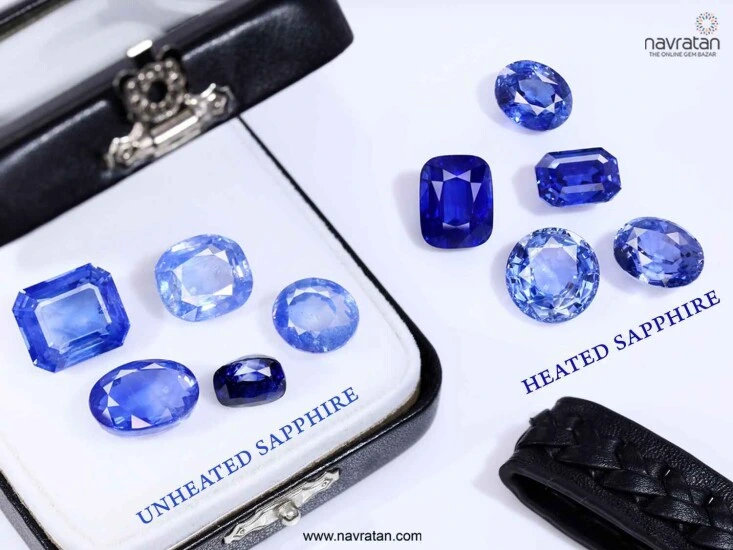
At first glance, heated and unheated blue sapphires may look almost identical. Their color and clarity can appear quite similar, but there are major differences in their rarity, value, and most importantly, price.
Heat treatment for sapphires is a common practice in the gemstone industry. It is done to enhance the color and clarity of the stone. Both treated and untreated sapphires are natural gemstones. The presence or absence of treatment can impact their market demand and price. An unheated blue sapphire is rare and highly desirable among collectors and gemstone enthusiasts.
So, does an unheated sapphire always command a higher price? Does heat treatment reduce a sapphire's value? In this blog,
we will answer these questions in detail and help you determine which sapphire is the right choice for you.
What Is a Heated Sapphire?
Like unheated sapphires, heated sapphires are natural gemstones. 95% of the sapphires in the gemstone marketplace are heat treated. These stones are subjected to heating to improve color and clarity. With heating, minor inclusions are removed, and unwanted color zoning is removed.
Only 1% of natural unheated sapphires are present on the Earth's surface. The discarded stones are heated to enhance color
and clarity. The process includes heating the rough sapphires in a furnace at extreme temperatures between 1000 and 1800
degree celsius.
What Is an Unheated Sapphire?
Unheated sapphires are natural sapphires that have undergone no treatment or enhancement. The word “unheated” means “non-heated”.
These gems are cherished for their natural beauty and authenticity. The original gemstones are highly valued for their
rarity and are considered a high investment. These stones are formed beneath the earth’s surface. They have natural
color which is because of trace elements like iron and vanadium.
Why Are Most Blue Sapphires Heated?
Not every sapphire has a good color. Some pieces feature secondary overtones more than the primary blue color. Only 1%
of the
blue sapphires stone
available in the market have a stunning rich color. The rest of the stones are heated to enhance color and durability.
- Color Enhancement: 99% of raw sapphires are heated to enhance the color. The crystal lattice has titanium and iron as trace elements. The intensity of these elements brings lighter or darker shades to the stone. To enhance the color of the stone, it is heated. There are some natural stones with uneven color distribution. Heating brings even color to the stone.
- Clarity Improvement: Blue sapphires fall under type 1 and type 2 gemstone categories, which means they have inclusions. Some gemstones are highly included, which makes them look dull. To enhance brightness, inclusions are removed by heating.
During the heat treatment of sapphires, the atomic structure gets altered, melting the inclusions.
- Removing Unwanted Hues: Secondary hues like gray, black, orange and more are widely present in blue sapphires. The presence of these unwanted hues ruins the overall beauty of the stone. The heating process removes these unwanted hues, making the stone fit for jewelry use.
- Market Demand: To balance the market demand heat treated blue sapphire stones are available in the market. These
gems make good options for affordable jewelry.
Heated vs. Unheated Sapphire – Key Differences
|
Features |
Heated Blue Sapphire |
Unheated Blue Sapphire |
|
Color Quality |
Treated corundums have an improved color and clarity due to the enhancement process they undergo. Heated sapphire
shows uniform color. |
Have natural color and inclusions. Unheated blue sapphire sapphire color ranges from pale to intense blue. |
|
Clarity |
These gems show high clarity. The heat treatment process includes melting these inclusions at high temperatures.
|
Natural unheated sapphire inclusions range from low to high. Blue sapphire unheated with no inclusions are rare.
|
|
Rarity |
Heated Blue sapphire is readily available |
Unheated sapphires are rare and highly valuable. It is believed that only 5% of these gems are available in the
market. |
|
Durability |
Heated sapphires are considered durable. Heat treatment does not affect the durability of the gemstone keeping
its natural hardness intact. |
Sapphires rank good on the hardness scale. They are second to be listed in the hardness scale after diamond. |
|
Market Perception |
Accepted widely in the jewelry industry |
Considered premium, highly desirable among connoisseurs and collectors. |
|
Certification |
Gemstone Certificate showing “Indication of Heating” authenticates that it has undergone heat treatment. |
Certificates mentioning “no indication of heating” or no heat sapphire meaning refers to sapphires not undergoing
any sort of heat treatment. |
|
Investment Potential |
Valued for affordable jewelry |
Appreciates quickly due to scarcity, making it a strong investment gemstone. |
|
Buyer Preference |
Suitable for buyers seeking beauty at affordable prices. |
Ideal for collectors, investors, astrological enthusiasts or those who value natural rarity. |
|
Astrological Value |
Heated blue sapphire is not good for astrology. It is believed that they do not contain vibrational energy required
for astrological benefits. Read More:
Heated or Unheated Sapphire, which is best in astrology?
|
Unheated blue sapphire benefits an individual with immense wealth, good health, and overall well-being. Zodiac
signs such as Taurus, Libra, Capricorn, Gemini, Virgo, and Aquarius should wear
Neelam stone
|
How Heat Treatment Affects Sapphire Value
Heated vs Unheated Sapphire price varies with the amount of treatment given to the stone. For instance, no heated blue
sapphire value starts from INR 5,000 to INR 1 lakh and more. Compared to this, the price of a heated Neelam stone
is significantly less.
Impact on Market Price
For Heated Blue Sapphires:
- Heated blue sapphires market price is 40% less compared to the unheated blue sapphires. The treatment varies from insignificant
to significant. The prices vary accordingly. Insignificant treatment gemstones are priced less compared to those that
have undergone significant treatments. The heated blue sapphire price thus ranges from INR 2,000 to INR 1 lakh. This
price variation is largely based on the 4 C’s (color, cut, clarity, carat weight), origin and amount of treatment done.
Read More: Blue Sapphire Price Guide - I
For Unheated Blue sapphires:
- Compared to heated blue sapphires , unheated sapphires have a premium price. The price of unheated blue sapphire depends upon clarity, color, cut, carat weight and origin. Vivid color, high clarity, precise cut and high carat weight commands high price.
Impact on Rarity
For Heated Blue Sapphires:
- These gems are commonly found in the market. You will find them appear good in color and high on clarity.
For Unheated Blue Sapphires:
- Unheated Untreated blue sapphire stone is rare and expensive. They have a natural color and clarity.
Impact on Long-Term Demand
For Heated Blue Sapphires:
- Heated sapphire demand is high in the market because of its affordability. These gems are widely used in affordable jewelry that speaks of beauty and shine.
For Unheated Blue Sapphires:
- These blue sapphires have a long-term demand because of their rarity. AAAA, AAA quality blue sapphires are best for heirlooms. Princess Diana’s blue sapphire ring features an unheated sapphire that still holds value as an heirloom piece cherished by her daughter-in-law.
Impact on Resale Value
For Heated Blue Sapphires:
- Heated blue sapphire resale value is much lower than their actual purchase price. Though heat treatment is widely accepted in the industry, the resale value is still lower. High-quality, minor-treated blue sapphire with good color, clarity, cut, carat weight (above 3 carats), and origin holds value. Compared to unheated blue sapphires, the resale value of heated sapphires is always less.
For Unheated Blue sapphires:
- Resale value is always high for unheated blue sapphires with good color, clarity and cut. High carat weight sapphires
above 3 carats from origins like Kashmir and Ceylon have high demand in the market. Certification is the key. Certified
untreated blue sapphires have high resale value.
Read More: Kashmir Blue Sapphire Guide - Benefits, Importance & Value


How to Identify Heated Sapphires
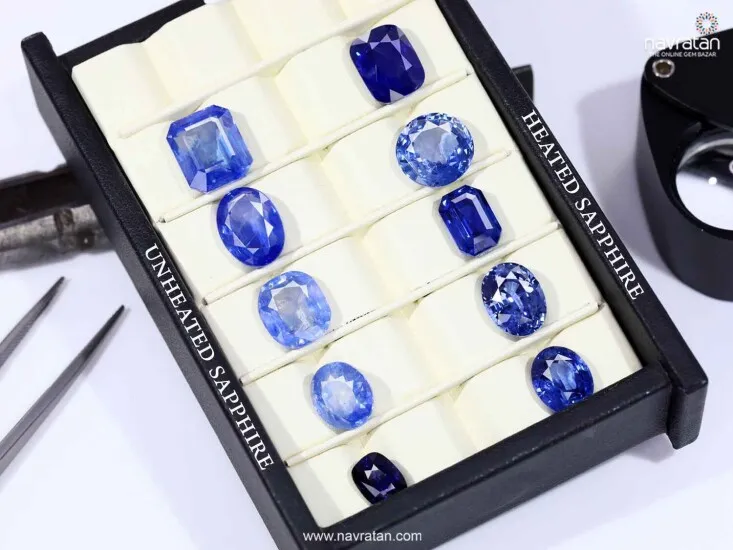
A certificate is authentic proof to tell if a sapphire is heat treated or not. You can also detect it by visually looking
at the stone. If it is free from inclusions, there are chances that it is heat treated. To summarize, heated sapphires
have:
- Even color distribution
- Free from inclusions
- The gemstone looks clear and brighter
Which One to Buy?
Buy an unheated blue sapphire if you value rarity and investment potential more than affordability. Their value increases
with time compared to unheated sapphires. At Navratan, you can find both heated and unheated sapphires. Choose one that
suits your preferences.


- Blue Sapphire (Neelam)
- Yellow Sapphire (Pukhraj)
- Emerald (Panna)
- Ruby (Manik)
- Diamond (Heera)
- Pearl (Moti)
- Cat's Eye (Lehsunia)
- Hessonite (Gomed)
- Coral (Moonga)
- Amethyst
- Opal
- Alexandrite
- festive
- Sapphires
- Ammolite
- Larimar Stone
- Turquoise Stone (Firoza)
- Tourmalines
- Moonstones
- Lapis Lazuli
- Zodiac Birthstone
- Citrine
- Tanzanite
- Gemstone
- Trending
- Color Gemstone


-
 May 7th, 2026
 -
 March 10th, 2026
 -
Timeless Jewelry Essentials: 5 Investment Pieces Everyone Needs
March 7th, 2026 -
 March 5th, 2026
 -